
Kailash Mansarovar Overland Tour via Kerung
Trip Facts
- Total Duration 16 Days
- Trip Grade Moderate
- Max Altitude 5610meters
- Group Size 25 + Persons
- Start From Kathmandu
- End From Kathmandu
- Trip Mode Pilgrimage Tour
- Accommodation Hotel / Lodges / Mud house
- Best Season May to September
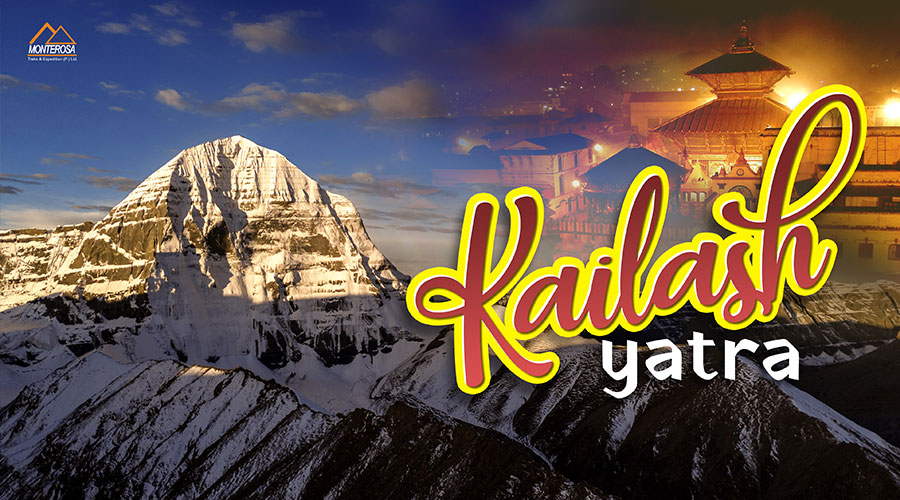
Kailash Manasarovar overland tour from Kerung takes you through the newly opened Nepal-Tibet border at Rasuwagadhi Kerung to Mount Kailash. Mount Kailash is one of the holiest places in Tibetan Buddhism, and Monterosa Treks and Expeditions will take you there for worship and hiking. The Kailash Yatra is the Tibetan pilgrimage to the center of the universe, and it takes place every 4 years. Khang Rimpoche, which means precious jewels of snow in Tibetan, is the Tibetan word for Kailash. There are four great faces on Kailash (6,714 meters/22,028 feet): the northern face is believed to be gold, the western face is believed to be ruby, the southern face is believed to be sapphire, and the eastern face is believed to be crystal. The mountain is spiritually venerated and circled by thousands of pilgrims every year, but no one has ever attempted to climb it.
The Kerung route to Kailash Manasarovar is believed to be a way for every living creature to show their devotion to the creator. It is the existence of the world's creator that is the core faith of all religions, regardless of which gods they worship. Lord Shiva and Goddess Parvati reside in Kailash and Manasarovar, which are considered to be the most sacred places on earth. The Buddha is worshipped by Buddhists. There is a certain degree of devotion that each living being has to its creator that makes them unique. Mount Kailash and Manasarovar are among the most sacred sites on Earth, no matter what the name of their god is. There is no doubt that the existence of God is the ultimate faith of all religions. This is the site where Lord Buddha meditated and lived, according to Buddhists. Hindus believe it to be the abode of Lord Shiva and Goddess Parvati.
The region is believed to have been a center of meditation and residence for Buddhists, Hindus, Jains, and Bonpo religious founders. Thousands of devotees visit this region every year to see the divine view because of this reason. It is for this reason that thousands of devotees from around the world visit this region every year to see the divine view. In this region, pilgrims are believed to obtain release from the clutches of life's vices by completing the pilgrimage. Kailash's diverse landscape, flora, and fauna make it an ideal destination for adventure seekers. The bulky Black Peak, located at 6714 meters above sea level, is believed to be a symbol of good fortune. It is considered beneficial to circumambulate the Kailash region in order to receive god's blessings and merits.
Manasarovar Lake:
The emerald water Lake Manasarovar (4580m.) near Mount Kailash is another important pilgrimage destination. There are eight monasteries surrounding the lake, giving it a sense of holiness and beauty. The lake is called the Lake of Consciousness in Sanskrit. The Lake was the location of many great meditations by saints, monks, and priests. Shakyamuni (Lord Buddha) achieved enlightenment near the lake. It is for this reason that Buddhists and Hindus flock to see this mysterious lake from all over the globe. The Hindu belief is that circumambulating the periphery 102km 108 times is a path to heaven after death. The cold water of this lake also facilitates the attainment of Ultimate Salvation, Mokshya (escape from the chains of physical existence). The rotation of this gigantic lake, however, takes three full days for locals, and 5-7 days for adventure seekers. The divine view of devotees worshipping and the beautiful simmering water under the blue sky compensates for our fatigue.
Rakshas Tal (Lake of Demon): There is a myth that says that the water from Rakshas Lake was neutralized by the water from nearby Manasarovar. Manasarovar is therefore believed to be eternal. Our travel company Monterosa Treks and Expedition Pvt. Ltd organize holy trips to Kailash Manasarovar overland tour from Kerung every year, so you can explore holy Yatra.
Meeting point: Arrival Day pickup from Kathmandu airport scheduled to your arrival timetable
Important highlights
- During Kailash Yatra, we will provide medicine (free of charge) to Medical Doctor.
- We provide massage therapist at a rate of 1 USD per minute (chargeable).
- Kailash Circumambulation will not have a car, bus, or Jeep service, but you can hire a pony and porter for four days. Part of the 53 km Kailash Parikrama involves a walk from Yam Dwar to Chongdo, which is 38 kilometers away.
- The Kailash region does not have Shiva temples but a Ram/Sita/Laxman temple can be found in Khojarnath, 15 kilometers from the Hillsa border between Nepal and China.
- Rudrabhishek, Hawan and Aarti are performed by Nepalese priests or pandits at Manasarovar Lake. Tirth Saradha can be performed in Manasarovar for an additional fee by a Nepali Pandit for individuals without parents.
- Manasarovar Lake, Dirapuk, and Zuthulpuk around Manasarovar Lake are only accessible by simple guesthouses that sleep four to eight people per room during Kailash Manasarovar Yatra. Toiletries are very simple and common.
- To make pilgrims suffer, the people here have not built any good hotels. Kailash Yatra/tour is not recommended for pilgrims who cannot adjust to the services listed above.
- Women who are pregnant should not make religious pilgrimages to Kailash Manasarovar.
- Manasarovar Lake should not be touched or bathed in by women who have been menstruating for four days.
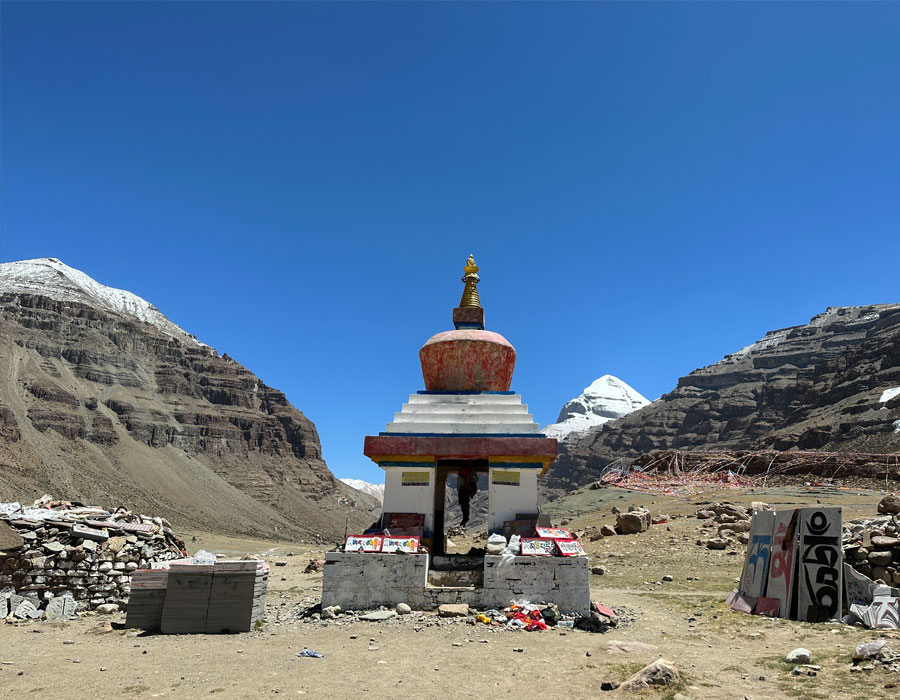
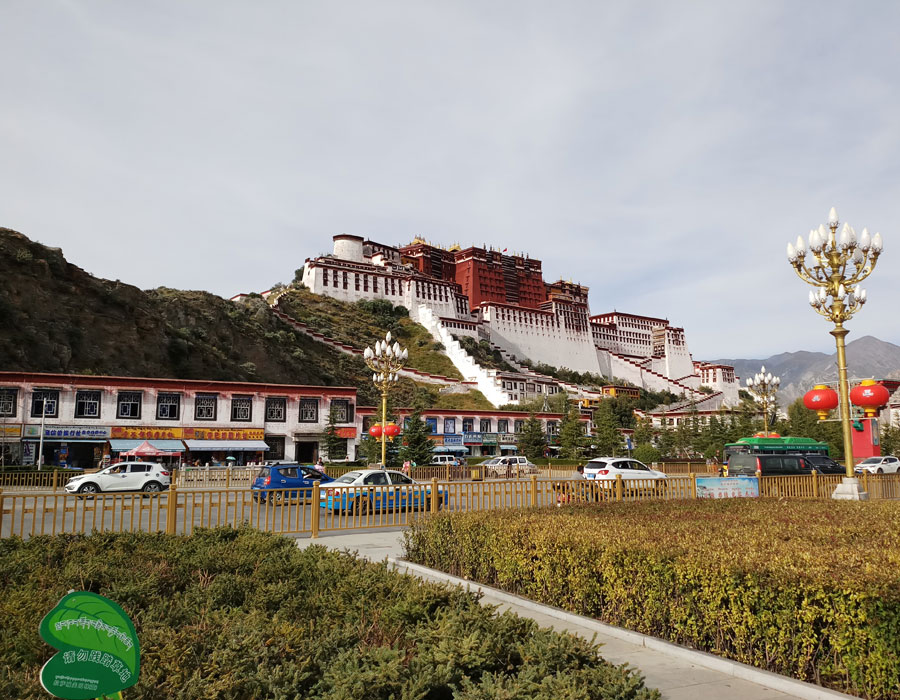
Places You Will See
Fixed Departure Dates for 2027
- 13 May 2027
Trip Itinerary A
-
If open Charan Sparsh in 2027, follow this itinerary
13 May 2027 Day 01: Arrival Kathmandu before 10:00AM and
transfer to hotel, check in, 3:00 PM briefing, evening Aarti Puja
14 May 2027 Day 02: Holy Sightseeing Kailashnath, Doleshwor
and Boudhanath monastery, Saktipeeth Guhjeswari, back hotel
15 May 2027 Day 03: Rudrabhishek and visiting in Jal Narayan
16 May 2027 Day 04: Starts, drive to Trisuli Bazaar & Syabrubesi
OR
16 May 2027 Day 04: Starting, drive to Trisuli and Ghatte Khola
17 May 2027 Day 05: Cross Tibet boarder, drive Kerung valley
18 May 2027 Day 06: Drive to Saga Bazaar and overnight in Saga
19 May 2027 Day 07: Drive Saga to New Donga 160 K.M, 3hrs.
20 May 2027 Day 08: Drive Hor & Manasarovar drive to Darchen
Full moon night in Manasarovar Lake
21 May 2027 Day 09: Hindu rituals and drive to Darchen, stay
22 May 2027 Day 10: Drive to Yam Dwar & walking to Dirapuk
23 May 2027 Day 11: Climb to Charan Sparsh 5km, back hotel
24 May 2027 Day 12: Starts walking to Zuthulpuk kora 3nd day
25 May 2027 Day 13: Walking to Chongdo and drive to Saga
26 May 2027 Day 14: Drive to Kerung Bazaar & stay overnight
27 May 2027 Day 15: drive to Nepal-Tibet boarder, Conti KTM
28 May 2027 Day 16: Transfer Kathmandu airport for departure
Itinerary B
-
13 May 2027 Day 01: Arrival Kathmandu before 10:00 AM and
transfer to hotel, check in, 3:00 PM briefing, evening Aarti Puja
14 May 2027 Day 02: Holy Sightseeing Kailashnath, Doleshwor
and Boudhanath monastery, Saktipeeth Guhjeswari, back hotel
15 May 2027 Day 03: Rudrabhishek and visiting in Jal Narayan
16 May 2027 Day 04: Start, drive to Trisuli Bazaar & Syabrubesi
OR
16 May 2027 Day 04: Starting, drive to Trisuli and Ghatte Khola
17 May 2027 Day 05: Cross Tibet boarder, drive Kerung valley
18 May 2027 Day 06: Drive to Saga Bazaar & overnight in Saga
19 May 2027 Day 07: Drive Saga to New Donga 160 KM, 3hrs.
20 May 2027 Day 08: Drive Hor & Manasarovar, overnight stay
Full moon night in Manasarovar Lake
21 May 2027 Day 09: Hindu rituals and drive to Darchen, stay
22 May 2027 Day 10: Drive to Yam Dwar & walking to Dirapuk
23 May 2027 Day 11: Starts walking to Zuthulpuk kora 2nd day
24 May 2027 Day 12: Walking to Chongdo and drive to Darchen
Check in hotel, drive to Astapad, Explore Kailash south face and
Mount Nandi & back to Darchen, stay overnight stay in Darchen
25 May 2027 Day 13: Drive Dongba & Prayang, finally in Saga
26 May 2027 Day 14: Drive to Kerung Bazaar & stay overnight
27 May 2027 Day 15: drive to Nepal-Tibet boarder, Conti KTM
28 May 2027 Day 16: Transfer Kathmandu airport for departure
Detail Itinerary
20 May 2026 Day 01: You will be welcomed at Tribhuvan International Airport in Kathmandu by our staff and escorted to the hotel. 2:30 PM, Kailash Manasarovar tour briefing in the afternoon. Provides Diamox medicine, duffel bag, and small day bag will be provided. Evening Aarati Darshan at Pashupatinath as well as Aarati holy dance on the banks of holy river Baghmati in front of Pashupatinath temple. Back at the hotel, we enjoy a vegetarian buffet dinner.
21 May 2026 Day 02: As mentioned in the following itinerary, after breakfast we will begin our full-guided holy sightseeing in Kathmandu valley. One of the tallest Shiva temples in Nepal is Kailashnath Mahadev Statue. After the Garuda wisnu Kencana Statue in Bali, Indonesia, it is the second tallest Hindu deity. The Kailash Nath Shiva statue is located in Sanga, Nepal, about 20 km from Kathmandu. These 144 foot / 44-meter-high statues was constructed using copper, zinc, cement, and steel. After Saga, visit Doleshwor Mahadev temple for Darshan.
Visit Doleshwor: For Shiva devotees, a trip to Kailash is incomplete without visiting Doleshwor Mahadev and Pashupatinath temples in Kathmandu. Kedarnath, one of the Char Dham Yatra was officially declared the head of the Char Dham Yatra on Aug. 22, 2009. In 2013, after the devastating flood hit Kedarnath Temple in Uttarakhand, regular prayers were conducted in Doleshwor Temple in Kathmandu, Nepal. Kedarnath Temple's head priest requested regular prayers to be held in Doleshwor Mahadev Temple instead of Kedarnath Temple.
Buddhist Temple Boudhanath Stupa: World heritage site recognized by UNESCO. Buddhism is a pilgrimage destination for Tibetans because of its enormous stupa. Visit nearby monasteries and schools for prayers and seminars and stroll around the gleaming white dome adorned with painted Buddha eyes. Nepal's Boudhanath stupa is located in Kathmandu. This stupa is one of Nepal's largest spherical stupas, located about 10km from Kathmandu's center and northeastern outskirts. You can visit Swayambhu Nath if time permits or see the Buddha Stupa dominating the skyline. Swayambhu Nath is a little hillock northwest of Kathmandu city where you can find peace and pray. Since the 1970s, visitors who found the name tongue-twister have called it "Monkey Temple." There is a panoramic view of the city from Swayambhu Nath, which overlooks most of the valley. With Hindu temples and deities incorporated in this Buddhist site, the stupa has stood for centuries as a symbol of faith and harmony. Here is said to be the beginning of the glory of Kathmandu Valley.
Visit Guhyeshwari / There are eight mother goddesses in the Astha Matrilas (Eight Mother Goddesses). Among them is Guhyeshori Shakti Pith temple. According to the Hindu legend Pauranik Katha. When Shiva's first consort SATI DEVI was insulted by her husband, she dropped herself into YAGYAAKUND (a religious fire ceremony). His corpse was burned senseless by grief when Shiva retrieved her and flew from Nepal to India. In the area where SATI DEVI's body lies, 51 Shakti Piths can be found. We call Guhyeshori the place where her secret part (GOPYA) vagina fell to, which we call Guhyeshori. We return to the hotel for a vegetarian buffet lunch, and she protects the deities of the Kathmandu Valley as well.
22 May 2026 Day 03: Kailash pilgrims are taken to Pashupatinath temple for Rudrabhishek, Hawan, and Aarati early in the morning. Seven or eleven Brahmin priests prepare the fire offering Hawan in the pavilion (mandap) and perform Sankalpa Pooja, followed by Swasti Vachan (preaching), Nyas, Rudra preaching, and Mahamritunjaya Pooja (death victory). 'Rudra', meaning 'Fearful Lord Shiva', is derived from Rudrabhishek, Rudranti Iti Rudri and Rudhiryoge Metal. The meaning is that people on this Earth are suffering from pain, violence, and greed, and that we sing religious hymns in praise of God Shiva to help them escape from these miseries and to attain justice, good health, prosperity, peace, and salvation.
Rudri is done for peace of mind. Pilgrims spend the first day of their Kailash tour visiting Pashupatinath and worshipping there. Devotees are said to receive good merits for worshiping Lord Pashupatinath and performing Aarati. As a result, the Kailash Tour is considered complete only after a holy visit to Pashupatinath. One of the most important pilgrimage sites is Kailash Manasarovar. In addition to Jyothirlinga and Shiva temples, Kailash is a place of pilgrimage. Humans are superior to Soul, Sages are superior to Humans, Gods are superior to sages, and Lord Shiva is superior to Gods even, and Kailash is the dwelling place of the supreme Lord Shiva. As a result, no pilgrimage would be complete without a visit to Kailash. A popular religious custom is to wish for a successful Kailash Tour by performing Rudra (Shiva's idol) Consecration and fire offering (Hawan) to Lord Pashupatinath, which takes 1 hour 30 minutes to 2 hours.
Every day, Bhatta pujari performs Panchamrit Pooja at Pashupatinath temple after Rudra Abhishek. It is a payable Pooja at the temple, with a Pooja Thali, milk, Rudrashe mala, flower garland and a lamp. Priest receives it from devotee. In offering Panchamrit Pooja for load, Pashupatinath fulfills all the desires for the Kailash Manasarovar Yatra / tour. Prasad and Rudrashe mala are given at the end of the ceremony. Hindu devotees are the only ones who can perform this, Pooja. It is forbidden for other religions to enter the main gates.
Budhanilkantha:/ Jal Narayan: Budhanilkantha (Jal Narayan) Vishnu Temple located in Budhanilkantha, Nepal, is a Hindu open-air temple dedicated to Lord Vishnu. At the northern end of Kathmandu valley, Budhanilkantha Temple can be identified by a large reclining statue of Lord Vishnu below the Shivapuri Hill. Budhanilkantha depicts Vishnu floating as if he were a giant astronaut on a bed of snakes in the middle of a big pool of water. As the name implies, Budhanilkantha means "mud disguised blue throat" and has nothing to do with Buddha. The peculiar name refers to two legends attached to the statue, one of them saying that a farmer found the long-lost statue in the mud when working his field with a plough and the other saying that Vishnu sacrificed himself by drinking the poison of the cosmic ocean, which then turned his throat blue.
23 May 2026 Day 04: It is the first day of Yatra today. In a private tourist coach, we travel 152 km from Kathmandu to Ghatte Khola (Nepal) and then to Nepal Tibet border. From Kathmandu, Ghatte Khola is a 6- to 7-hour drive by Jeep. On the way, we will stop for lunch at Trisuli Bazaar. For tourists and Kailash Yatri Ghatte Khola offers standard hotels and lodges with Nepali and Indian cuisine.
24 May 2026 Day 05: The next destination on our itinerary is the Kerung valley in Tibet. The Nepal immigration office at Ghatte Khola will check our entire visa and passport. Upon completing immigration formalities, we drive or walk for 15 minutes to Rasuwagadi bridge and then cross the friendship bridge to Nepal Tibet. The Tibetan immigration office will check each visa individually. Upon completion of immigration formalities, our Tibet guide will issue you a travel permit for the Kailash Manasarovar tour/Yatra. All immigration formalities will be handled for you by him. You will be taken to the Kerung valley by Tibetan bus / Mini bus. There are numerous hotels of tourist standards in Kerung valley, a Tibetan settlement with fine accommodations.
25 May 2026 Day 06: We drive from Kerung to Saga on this day. It takes 5-6 hours to drive through Salt Lake and past Tibetan landscapes and nomadic communities. On the way, a warm lunch box will be served. The Yarlung Sangpo (Brahmaputra) River will eventually be crossed before reaching Saga. In Saga, we have dinner and spend the night.
26 May 2026 Day 07: Drive to Dongba just 160 KM and it takes 3 hours approximately. Reach Dongba and rest or acclimatization.
27 May 2026 Day 08: It will take 8 to 10 hours’ drive from Saga to Manasarovar Lake and Darchen, it is total 390 KM distance. During this day, we travel about 390 kilometers in about 8-10 hours. By afternoon, you can see Holy Kailash Parvat and Manasarovar Lake for the first time from Hor. Approximately 2-3 hours after lunch, the rotation or kora of Manasarovar Lake will be completed. You will pass through various monasteries before stopping at Chiu Gompa (Monastery) while staying Manasarovar Lake and drive to Darchen for overnight.
Manasarovar information
Located at an elevation of 4850 meters above sea level, Manasarovar Lake is also known as Brahma's Lake or Mapam Yumtso Lake. "Manas" means mind or consciousness, and "Sarovar" means lake. Among Hindus and Buddhists, it holds deep spiritual significance and broad religious values. An individual is believed to be purified from sins and sick by making a round of the Lake and taking a holy bath in it. Hindu scriptures mention this lake as a must-visit place for anyone seeking salvation - the highest level of achievement. It looks very charming when the waves of the Lake cascade in the wind.
As described in Ramayana, a person who bathes in the pure water of Manasarovar Lake after death will immediately enter heaven. Similarly, it is written that whoever drinks the water of this lake can recognize Shiva's palace, Shivalok. In the north of Manasarovar Lake, Kailash Parbat is located about 58 kilometers away. The Brahmaputra River flows eastward from Manasarovar Lake. At least once in their lifetime, most people want to visit Kailash Parbat and Manasarovar Lake. Between 2 AM and 4 AM on full moon nights, people are generally believed to have the opportunity to see or visit God Shiva and Goddess Parvati bathing in Manasarovar Lake. But every night, Parvati comes from Kailash to bathe in Manasarovar. Every night, especially during full moons, the stars appear as God bathing in Manasarovar or falling in the water. Pilgrims who stay at this place at night are said to be able to watch God and live there. Hindu religious books mention that all Hindus must visit this lake at least once in their lifetimes as it covers a large area that is pure.
Rakshasas Tal (Demon King Ravana Lake) Sarovar
Based on Hindu tradition, this lake is named after it. It is believed by Hindus that the dark water hides carnivorous monsters. According to this belief, people avoided this lake, believing it to be a symbol of darkness and destruction. There is a traditional religious story that the water of this lake is poisonous and deadly. As a result, a tunnel was built from Manasarovar Lake to replace the poisonous water of this lake.
There is a golden fish in this lake and the water is pure. It was later discovered that this fish was still alive. People's negative attitude towards the lake changed after it and they started going nearer to it, but still don't drink its water. In Hindu mythology, Ravana meditated in this lake during the Treta Yug, making Lord Shiva happy. In the west of Manasarovar Lake lies Rakshas Lake. It is located at an altitude of 4,540 meters above sea level. Birds abound in Manasarovar Lake, including ducks, but there are none in Rakshas Lake.
Mount Kailash
Hinduism, Jainism, and Buddhism are said to have originated in this part of the world. The holy books such as Ramayana and Mahabharata glorify Kailash Parbat. A civilization without a description of Kailash Parbat is incomplete, according to ancient Asian stories. It is located in Tibet and is known as Kailash Parbat. There is a lack of satisfactory scientific research in this region. The religious Parbat stretches from the Brahmaputra in the east to the Karakoram in the west. According to Buddhist and Shaiba literature, Kailash is the center of the world, being the center of Sumeru. Hindus believe it to be the residence of Lord Shiva and his wife Parvati. In the name of Kang Rinpoche, Buddhists. Revere it. Kailash and Manasarovar are considered great natural Mandalas by Buddhists. For them, the Mandala represents respect and salvation. This isolated peak is worshipped by Jains as Aspada. This is the same place where the founding father of this religion, Rishavadev, received spiritual salvation.
Various logics can be used to claim that this Parbat is sacred. The isolated Parbat is also the source of the Brahmaputra, Satlaj, Indus, and Karnali rivers. The total periphery of Mount Kailash is 53 km and pilgrims should walk 38 km within 3 days and if add Charan Sparsh (Touch Kailash) tour then it will be 4 days' kora. Hindu mythology states that a person who moves around Kailash Parbat will be free from all sins committed during their lifetime. Nirvana is directly achieved if they move round the Parbat 108 times. A person who moves Nandi once gets a return equivalent to moving around the Kailash 13 times. It is believed that Kailash Parvat is the form of Lord Shiva, and that the water flowing from its snowy tip is the holy river Ganges. A beautiful view of Mount Kailash can be had from this monastery's side. The Mount Kailash can be seen between Mount Manjushree at the right and Mount Bajrapani at the left when viewed from Dirapuk. Rakshas Lake is formed when Ganges, which originated from Mount Kailash, meets Lachhu River. The Kailash Himalayan Ranges from rivers that flow into Rakshas Lake. Karnali River flows out of Rakshas Lake junction. Water from Rakshas Lake escapes through Karnali River, but water from Manasarovar is stored in Lake Manasarovar.
28 May 2026 Day 09: Drive to Yam Dwar (the Gate of Death) after breakfast. Yam Dwar is the starting point for your trek around Mt. Kailash. Yam Dwar is the starting point for your walking trek around Mt. Kailash. For those who are unable to walk, you can hire a pony and local porter for 3 days, but you must inform us while at Manasarovar Lake. After about five to six hours of trekking, we will arrive at Dirapuk. You can see the north face of Mt. Kailash much closer from Dirapuk. The place seems to be occupied by Lord Shiva himself. Dirapuk mud house overnight stay.
29 May 2026 Day 10: From Dirapuk, pilgrims walk for 4 hours (4km) to touch the feet of Mount Kailash, known as Charan Sparsh. The experience of touching the base of Kailash Mountain makes them feel blessed by Lord Shiva. Returning from Dirapuk takes around one and a half to two hours, and it is a day tour. In Hindi, "Charan" means "feet" and "Sparsh" means "to touch". Together, the two words mean "to touch one's feet". Since time immemorial, it has been a tradition to touch Kailash Parbat's feet. The concept of "Charan Sparsh" is based on science. The human body releases vibrations that touch the feet, which encourages the flow of energy and blessings, happiness, and success Energy exchange gives one vigor, self-confidence, and contentment. In August and September of 2026, Charan Sparsh and Touch Kailash were closed due to accidents. The program 2026 is kept, but we are not sure whether Charan Spars will be opened.
GANESH KUND (SAROVAR)
There is a holy Ganesh Kund located about 45 minutes before reaching Dolma La Pass 5636m. (Kailash circuit). It takes 15 minutes to walk to the walking trail. Kund resembles Lord Ganesh's bathing place where he bathes.
GAURI KUND: THE LEGEND
According to the legend of Shiva Purana, Hinduism follows Sanatana Dharma and there is a story about Gauri Kund. According to the Puran, Kailash Yatri is purified by Gauri Sarovar, which purifies his mind, body, and speech. Therefore, almost all Yatri of Kailash Manasarovar tours include their tour program. Goddess Parvati Mata bathed in this Gauri Kund where Gauri Mata resuscitated a picture of her beloved son Ganesh made from a cleaning agent frothing on her body. As Ganesh jee stood on the path to prevent unknown from entering her holy deep, Lord Shiva appeared on Mt. Kailash but Ganesh jee didn't recognize him. When Lord Shiva became furious and cut off the kid's head, Mata Parvati was devastated by the sight and requested that Lord Shiva restore the child's life, so Parvati got her son back. Kailash Yatri is not the only one fascinated by this real story.
VISITING GAURI KUND: ITS MEANING AND SIGNIFICANCE.
Many Kailash Yatri visit this holy Kund during their Parikrama or Kora to purify their minds, bodies, and speech. To have peace in heaven, they offer TARPANA and Jaal (holy water) to their ancestors. Their homes are filled with holy water brought from the Kund.
WHERE IS THE GAURI KUND LOCATED?
It is located at 5608m., above sea level, after crossing steep descents of Dolma La pass, the highest pass during Kailash Manasarovar Yatra tour, but the path for walking has not yet been constructed.
30 May 2026 Day 11: The distance between Dirapuk and Zuthulpuk is 4790 meters - 22 kilometers. On this day, we will pass through Dolma La or Dorma La Pass, which is 5636 meters high from sea level. Due to an impending snowstorm, the weather is unpredictable, so we should begin our journey as soon as possible. After the pass, we need to descend steeply to Shapje Datok and then onto Zuthulpuk monastery as flat walking. Once again, we will stay in a mud house or guest house for the night.
31 May 2026 Day 12: Walking from Zuthulpuk to Chongdo (Zong Dho) and then driving to Darchen and Manasarovar Lake for full moon. Sarovar literally means 'lake of consciousness' and Manas simply means 'brain'. Man Sarovar is therefore regarded as a place for storing 'consciousness' and 'knowledge' In addition to its name, it is also known as the lake created by Lord Varma. In Hinduism and Buddhism, Manasarovar Lake has a deep religious and spiritual significance.
The lake has been closed to empty and deep bathing since 2018, but pilgrims can wash their hands in it as well as Sparsh. Water from Manasarovar Lake is brought by our company's workers inside the tents, where it is heated by cooking and mixed with cold water for bathing. Everybody can do bathing Separately tent Male and Female. After bathing each Yatri, a Nepali Brahman performs Rudrabhishek, Havan, and Aarti with Pushpanjali. Also, every pilgrim or family traveling to Kailash Manasarovar is offered Rudrabhishek, Havan, Aarti and Pushpanjali on the full moon evening day or the next day May to September every year.
In order to be relieved of their sins, some are meditating and others are reciting the names of their ancestral gods, performing the Hawan (offering grains mixed with butter to Pooja and Aarati (butter lamps) are completed and they exchange happiness. Full Moon Night in Manasarovar
01 June 2026 Day 13: Drive from Manasarovar to Dongba, Prayang and finally arrive Saga and overnight stay here.
02 June 2026 Day 14: It takes 5 hours to drive from Saga to Kerung valley. My last night at Kerung in Tibet will be last night.
03 June 2026 Day 15: Kerung to Kathmandu: After breakfast, we drive to Rasuwagadi to cross the Nepal-China Friendship Bridge. Having completed customs and immigration formalities on both Tibet and Nepal sides, we continue our drive to Kathmandu for about six or seven hours. On the way back to Kathmandu, you will have lunch. You will be dropped off at your hotel in Kathmandu.
04 June 2026 Day 16 From the hotel, we will be taken to Tribhuvan International Airport Kathmandu for final departure for your final destination.
Tour Cost for (NRIs) Foreigners/ tourists
Per Person USD 3,000 Double / Twin / Triple room Sharing basis
Per Person USD 3,500 Single room basis
(Manasarovar, Dirapuk, Zuthulpuk only availableMud house or guest house)
Extra cost if required for Kailash Circuit:
Horse ride during the Parikrama 1 horse for 3 days USD 400 more or less
(Directly payable to the Tibetan guide)
Porter for carrying small bag for 3 days round Kailash USD 190 more or less
Prices subject to change if pony, porter cost increases or decreases, no sharing between each other.
What's Included
- Arrival in Kathmandu Airport & transfer to hotel, welcome drink
- Evening visit Pashupatinath temple Aarati, Pooja, holy Darshan
- Pashupatinath and Budhanilkantha (Sleeping Vishnu) Darshan
- Mount Kailash orientation for Kailash& Manasarovar Lake tour
- 4 nights’ hotel in Kathmandu (double-bed room sharing basis)
- 3 times meal (breakfast, lunch, dinner) pure vegetarian meals
- Drive Kerung-Tibet Border-Kathmandu by private tourist coach
- Bus 16 – 29 seaters for whole group travel to Kailash tour/Yatra
- Tibet side for less 15 persons, provide air - condition mini bus
- We serve guest house- mud house Kailash- Manasarovar Yatra
- Nepali team leader with fluent speak English/ Hindi language
- Chef (who can prepare Indian-dishes as per your requirement)
- Cook, cook helper and full support Nepali staff (Sherpa guide)
- Support truck for carry food- Kailash-equipment, Nepali staff
- Yak and yak man for round kora (Parikrama) Mt. Kailash Yatra
- Oxygen cylinder with mask & regulator use for emergency use
- Kailash basic first aid kit box, altitude sickness medicine Diamox
- Life medical insurance for Nepali Kailash staff and team leader
- A duffel bag and day pack for Kailash- Manasarovar tour / Yatra
- Kailash travel permit & Tibet visa for Kailash -Manasarovar tour
- We provide tar poling privet toilet tent outside-guesthouse/hotel
- Rudrabhishek, Hawan, Aarati in Pashupatinath with 11 Pandit
- 1 Pandit in Manasarovar Lake for Rudrabhishek, Hawan, Aarati
What's Excludes
- Additional personal expenses for Kailash tour
- Rescue jeep, any other expenses if required
- Personal equipment & stuffs for Kailash tour
- Down Jacket, Rain coat or umbrella
- Visa and re - entry visa for Nepal
- Tips for Kailash staff, drives, guide
- Any other additional cost for Yatra
- Travel insurance from home country
We provide / includes for safety service in Kailash Tour
- 1 big oxygen bottle tanks in each bus surface with mask- regulator
- 4 Poisk Russian oxygen tank for Kailash Kora with Mask & Regulator
- Blood pressure checking machine for team, every day check for Yatri
- Oximeter-checking every day our Yarty's oxygen label in your blood
- We proved altitude medicine Diamox Pills for Kailash circuit Tour
- We provide 3 bottles of Mineral (1 litter) water per day for 1 Yatri
- Gamo Bag (altitude life safe chamber bag) for altitude sickness
Our extra service includes than other operator
- We do welcome our all Kailash Yatri in KTM airport by Flower & Rudrashe Garland
- Arrival day evening will be Aarati Darshan Pashupatinath with holy tour guide
- Second day morning, Rudra Abhishek, Hawan, Aarati in outside of Pashupatinath gate where Hawan place with 11 Brahman priests as same dress, chanting Rudra Abhishek mantra. Time approximately 2 hours.
- After Rudra Abhishek, special spiritual holy Darshan inside of Pashupatinath Temple with Thali Pure Cow Milk, flower garland, Rudrashe garland (Mala) with Prasad, will do oil Lamp burning to main Shiva ling in Pashupatinath temple offering you through by priest and after offer Prasad and Mala get back to you and your family. This Pooja do buy ticketing system, ticket we will provide 1 family for 1 ticket, if single person without family, we provide 1 ticket for 1 person also.
- Rudra Abhishek, Hawan, Aarati also will operate in Manasarovar with 1 Nepali priest.
- Our Guide and staff will be highly professional for Kailash Manasarovar Yatra/Tour
- If our Kailash Yatri wants to meet Chief priest of Pashupatinath temple, we try to arrange meeting in Pashupatinath.
Packing list for Kailash Yatra
- Small back pack for 3 days Mt. Kailash Parikrama/kora
- Enough warm clothing for mount Kailash Yatra / tour
- Basic medicines (for minor injuries / lifesaving kits)
- Any regular medicines that you have been prescribed
- Toiletries kit (shop, Shampoo, Toothpaste, tooth brush)
- Water bottle /Thermos flask for hot water (2litters bottle)
- Sport shoes better for walking 3 days Kailash Parikrama
- Gloves, Woolen socks (minimum 4 pairs), hand clove
- Wool / Thermo cot undergarments, wind proof jacket
- Comfortable shirt and pants for doing Kora / Parikrama
- Sunglasses, Sun lotion/cold cream, Torch light, rain coat
- Umbrella, walking stick, Sandal for use evening & morning
- Sweets, Zinger / garlic candies or dry fruits, lozenges, etc
Cancelation Policy
- Cancellation made up to 7 days before the trip departure will incur a 50% fee of the total trip cost
- Cancellation made less than a week before departure or upon arrival in KTM will get no refund.
Hotel in Nepal side
Kathmandu: 5-star deluxe Hotel Radisson or similar (Single / Double/ Triple room)
Ghatte Khola; 2-star hotel river view or Similar hotel (Double / Triple bed room)
Hotel in Tibet side
Kerung Valley: 4-star Hotel Pilgrim Inn or Similar (Single / Double / Triple bed room)
Saga: 4-star Northern Holiday or Similar (Single / Double / Triple bed room)
Manasarovar Lake: Normal guest house (Dormitory bed room more than 6 beds)
Darchen: 4-star hotel Kailash Himalayan (Single / Double / Triple bed room)
Dirapuk: Normal guesthouse or mud house Dormitory bed room more than 6 beds)
Zuthulpuk: Normal basic guesthouse Dormitory bed room more than 6 beds)
Note:
- Safe & Thrilling Tour to Kailash with highly professional escorts.
- Our company Monterosa Treks and Expedition (P) Ltd never compromise with high quality service, if quality you will get cheaper price but then service quality will also go down. We have 32 years' record till now and zero casualties.
- Our company is your Kailash Manasarovar Yatra / tour dream holiday!!